Thoughts on the Movies I Watched in 2023

Spoilers ahead!
Suzume
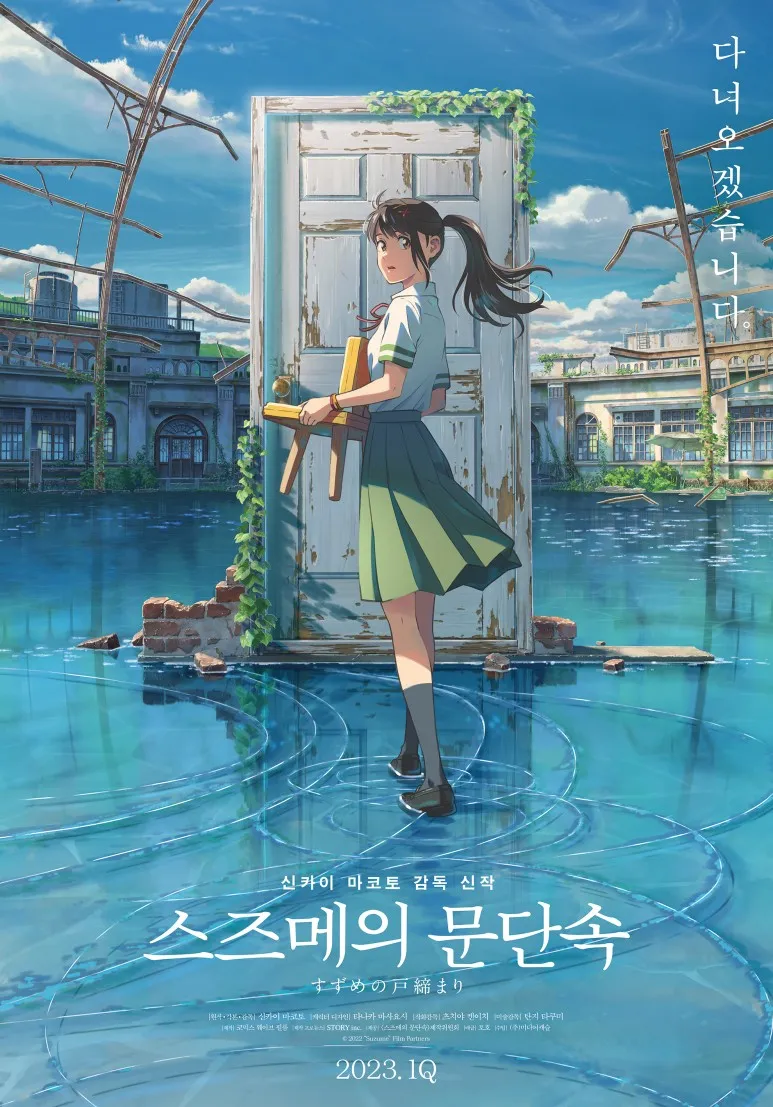
I like Makoto Shinkai’s films. Especially if you’re interested in visual art, I think Shinkai’s works are worth watching for the animation alone. From this perspective, Suzume showed the most solid and precise visuals. The photorealistic colors were beautiful, and the intricacy of the animation was excellent. Seeing it maintain accurate movement even in wide-angle shots with heavy distortion made me think it was truly impressive.
However, setting the animation aside, I don’t think it’s an objectively good movie. I felt a kind of strangeness in the world-building—which seemed artificially assembled to maintain a narrative structure centered on a male-female protagonist pair—and in the story that unfolded from it. A high school girl protagonist immediately taking a liking to a boy she merely passes by on the road, and multiple supporting characters showing excessive kindness to a protagonist they’ve never met before—these things definitely felt odd to me. It made me think that Suzume was a film that prioritized popularity and commercial appeal over the quality of the work itself.
Makoto Shinkai was originally a director who focused on the inner self. Before the red string of fate, the fate of the world or trivial settings were insignificant matters. But that same Makoto Shinkai has been walking in the opposite direction ever since he started foregrounding the trauma of Japanese society as a whole. — Song Kyung-won, film critic
Suzume in particular feels like it was made with an arrogant attitude—as if the filmmakers expected the audience to just go along with it rather than understand it, and assumed they naturally would. In the same director’s other work, 5 Centimeters per Second, he deeply explored the story of three characters trying to overcome a bitter sense of distance; in The Garden of Words, he told a love story metaphorized through Man’yōshū (萬葉集) poetry. Suzume has none of those new attempts—instead, it recycles keywords that had already proven popular. By the time of Suzume, I saw comments calling it “the disaster trilogy” and “tautological repetition,” and I fully agreed. Using the same keywords—difficulties caused by disaster situations and the will to overcome them—from Your Name. through Weathering with You to Suzume makes the audience waiting for the next work feel exhausted in itself.
John Wick: Chapter 4
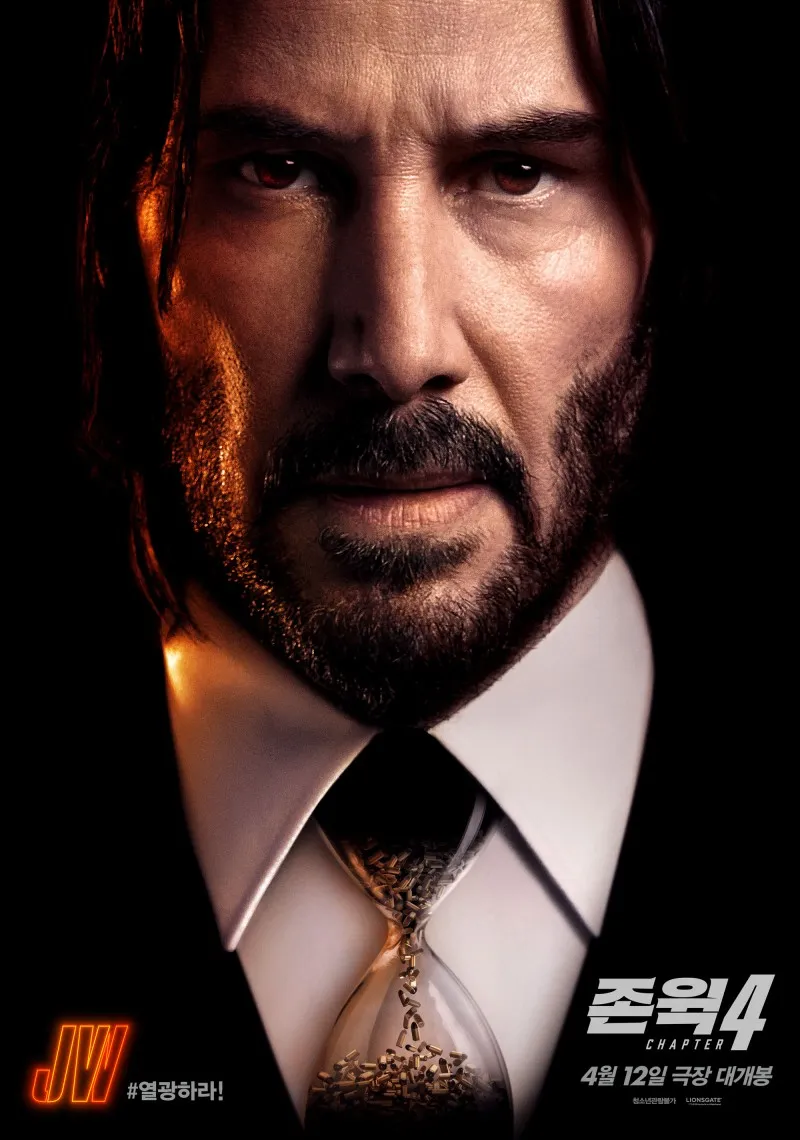
As director Chad Stahelski stated in an interview that “John Wick: Chapter 4 is both a continuation and a conclusion of the previous films,” the movie features a succession of elements that symbolize the John Wick series—the coins and the Ruska Roma gang from Chapter 1, the bulletproof suits and bounty system from Chapter 2, the Arabic High Table elder and the Adjudicator’s handlers and Japanese ninjas from Chapter 3. At the same time, these elements don’t clash, and I enjoyed seeing new attempts unique to the fourth installment, such as 80s Hong Kong cinema-style action and the use of traditional Japanese cold weapons like bows and shuriken.
And all of this was captured with the John Wick series’ signature cinematography philosophy—steadfast long takes without camera shake, honestly and plainly depicting what happens in this world. It could have felt awkward if the actors lacked skill, but as is well known, Keanu Reeves and the other actors trained in marksmanship and martial arts themselves, and stubbornly brought it to life through their performance. That’s what makes this film so appealing.
I also remember how excellent the film’s visual and sound effects were. For example, in the scene where John Wick seizes an assassin’s incendiary shotgun in Paris and turns it against him, the camera gradually rises to illuminate John Wick from a top-view perspective in a novel way. This scene—which the director revealed was an homage to the game The Hong Kong Massacre—created a uniquely beautiful tableau under the exotic Parisian night sky, with the actor’s calculated movements, spectacular bursts of flame, and the heavy sound of shotgun blasts.
Meanwhile, the narrative of Chapter 4 embodies the series’ core—“thorough vengeance against those who touch what is most precious”—at its most intense depth. The Marquis de Gramont, who follows Viggo and Santino as the next antagonist, is a figure entrusted with full authority over the High Table’s forces that antagonize John Wick. But unlike previous villains who destroyed the puppy—the sole remnant of his deceased wife—and the house that held the same meaning, the Marquis aims to erase the very concept of John Wick himself, and like Santino, he is cleanly dispatched with a single bullet.
There had been comments from the production team about wrapping up John Wick with Chapter 4, and the narrative ended so conclusively that I thought the series was truly over. But recently I heard news that a fifth installment is in production. It’s welcome news, but I’m worried that they might be forcing a continuation of a story that wrapped up well in Chapter 4.
Oppenheimer
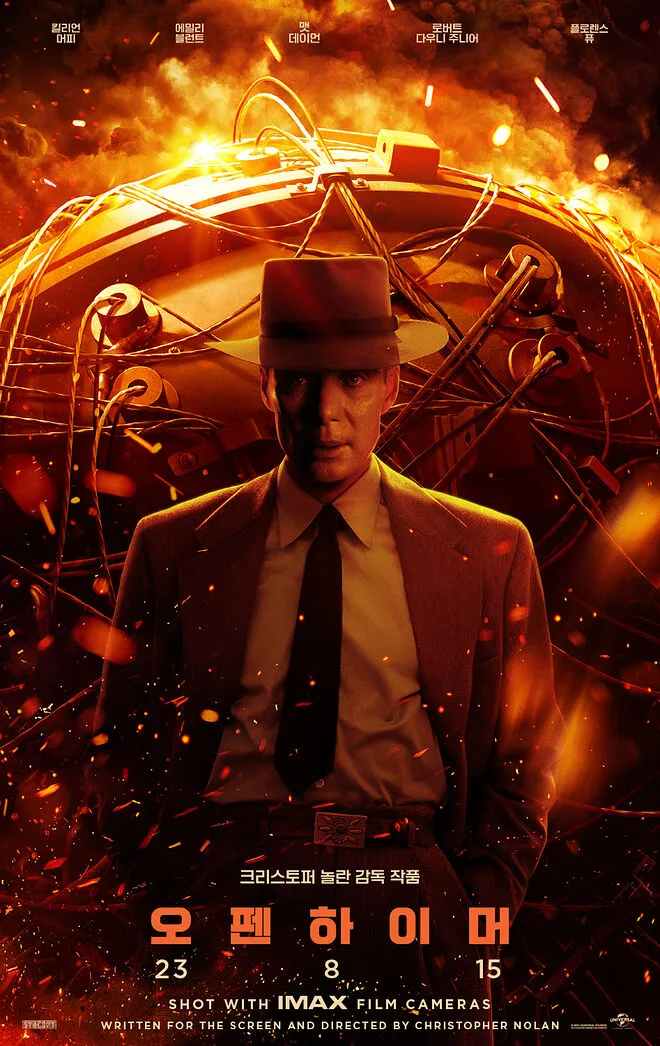
Oppenheimer is a political film. Not one that influences real-world politics, but one that meticulously captures the political circumstances of the time, including the concept of primitive mutually assured destruction, the beginning of the Cold War, and the rise of McCarthyism. In that sense, since McCarthyism, nuclear development, and the Cold War are all ultimately outcomes that spread in a chain reaction from a single point, I think the metaphor of a “social chain reaction”—which is commonly invoked when discussing the film Oppenheimer—is highly appropriate.
At the same time, Oppenheimer is also the work in which Christopher Nolan’s auteurist characteristics are most evident. Like his previous films Interstellar and Dunkirk, he interweaves timelines, but this time he also varies the aspect ratio and color to distinguish scenes. This does make the narrative harder to follow at times, but it allows for a multifaceted view of Oppenheimer as an individual—as a young scientist, a social activist, a lover, and the director of the Manhattan Project.
So the film conveys Oppenheimer as an individual who changes even as he carries the grand title of head of the nuclear weapons development project. A young scientist and a woman’s lover, he briefly becomes a national hero after the success of the Manhattan Project and the bombings of Hiroshima and Nagasaki, but then, feeling guilt, engages in disarmament and anti-war pacifist political activities. Regarding his life caught up in uncomfortable historical tasks, the film twice quotes through his mouth a line from the Hindu scripture Bhagavad Gita that he had once recited: “Now I am become Death, the destroyer of worlds.”
I was engrossed and enjoyed watching it, but the hearing scene that goes on for nearly the last hour was quite tedious. I agree that it was a scene that effectively reveals Oppenheimer’s psychological state as an individual wounded by political attacks, and that it was a necessary part of the film as a biographical work about Oppenheimer, but the constant stream of specific figures and legal terminology made it difficult to maintain tension.
The Boy and the Heron
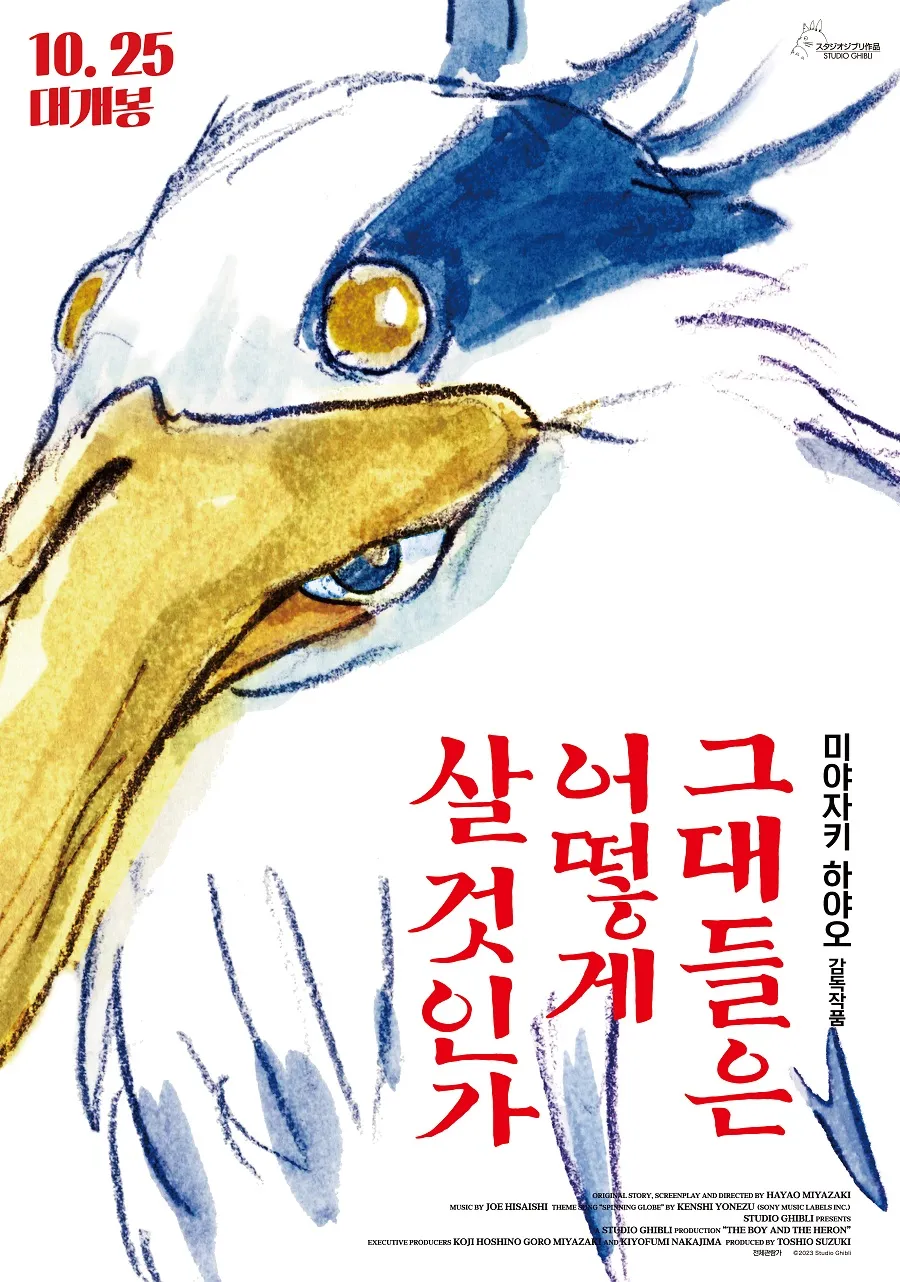
At first, seeing the title of Ghibli’s next film, I was intensely curious about what kind of story the 82-year-old master had made after reversing his retirement. After watching it, the content felt more disjointed and messy than I expected, but one thing I became certain of by the time the credits rolled was that The Boy and the Heron, despite its grandiose title, is an autobiographical film about Miyazaki’s own feelings and emotions. Whereas Oppenheimer is a work that coldly captures the joys and sorrows of the real-life Oppenheimer as Christopher Nolan understood him, The Boy and the Heron is a film in which Hayao Miyazaki abstractly infuses his own life and the ideas within it into the protagonist Mahito.
So The Boy and the Heron feels different from the Ghibli works we know, both in its message and form. Unlike Princess Mononoke and Howl’s Moving Castle, which critique material civilization and champion ecologism, and Spirited Away, which deals with greed and loss of identity, The Boy and the Heron tells a more abstract story about the crossroads of an imperfect world and the outcomes at those crossroads.
At the same time, it incorporates themes reminiscent of Alice in Wonderland and stories about Japanese modern history after the Meiji Restoration, requiring a fair amount of background knowledge. I found it to be the most esoteric and unfriendly of Ghibli’s films. Watching it, I understood why it’s such a polarizing Ghibli work.
But as I reviewed and pieced things together one by one, I felt it ultimately boils down to the content of finding one’s own path. For example, the line “Those who learn of me shall die,” which appears mid-film, felt like a warning from the pelicans and parakeets beside it—as if they, by not living that way, served as cautionary tales, urging the protagonist to find his own path. It’s likely aimed at the next generation of creators, but the meaning of the words resonates with everyone watching the film.
“How should one live?” After the screening, the audience—myself included—returns to reality, stepping out of the theater with this question hanging over us, just like Mahito who returns to reality leaving behind the great-uncle’s crumbling world.